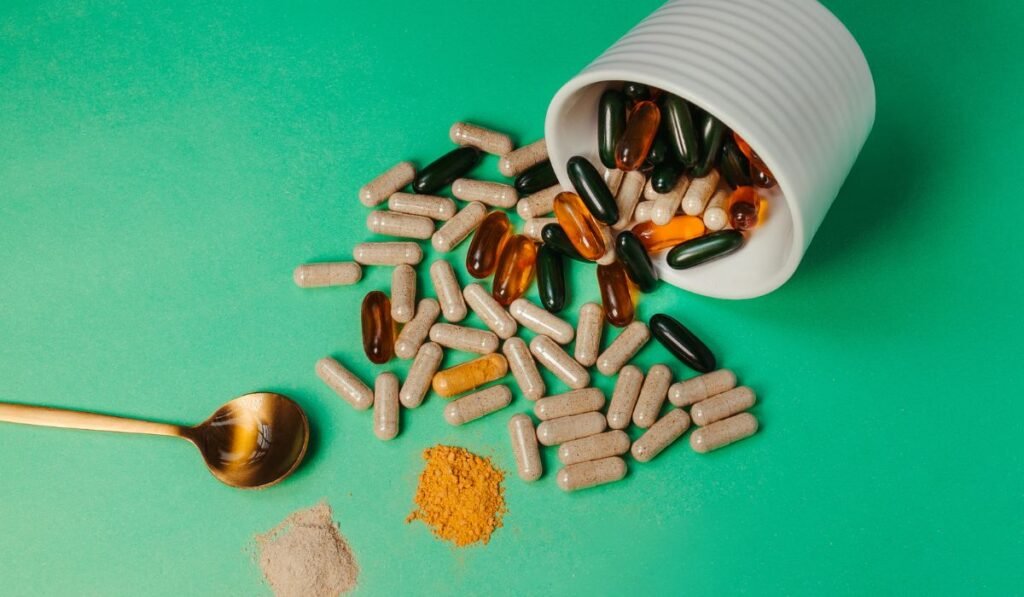
Ever picked up a shiny bottle of multivitamins at your local pharmacy and thought — “This will fix everything”?
You’re not alone. The global multivitamin industry is worth billions, and in India alone, it’s expected to be a ₹46,48,435 crore market by 2033
But here’s the real question: Do these pills actually work?
Or are we just buying expensive urine?
💊 The Big Multivitamin Myth
Most people pop a multivitamin daily — thinking it’s a shortcut to better health.
But studies show most fat- soluble multivitamin supplements never get absorbed by your body.
Why? Because they’re made using synthetic vitamins and minerals, often derived from petroleum products or lab chemicals — not from natural food sources.
Your body doesn’t recognize these synthetic compounds as “food,” so it simply flushes them out through urine.
That’s why despite taking supplements every day, your fatigue, hair fall, and dull skin don’t go away.
⚠️ The Hidden Problem: Weak Regulation
Here’s the scary part — supplement companies in India aren’t required to prove effectiveness before selling their products.
Yes, you read that right. You could literally make capsules at home, slap a fancy label on them, and legally sell them as multivitamins. There are safety checks and certification barriers, but the point is it is easy.
That’s why many brands cut corners. Some even fill capsules with oxidized oils or poor-quality extracts that do more harm than good.
A report once revealed that most of fish oil supplements already go rancid before reaching the customer. So much for “heart health,” right?
🌿 When Multivitamins Can Help
Now, don’t get me wrong — multivitamins aren’t all bad.
They can be useful when prescribed by a doctor for a specific deficiency.
The key is to ensure they’re natural — meaning the ingredient list clearly mentions food-based sources (like amla, moringa, or wheatgrass), not just chemical names.
If your supplement doesn’t tell you where its vitamins come from, that’s your first red flag.
🧘♂️ Ayurveda’s Take: Natural Alternatives That Work
Long before modern supplements existed, Ayurveda had already figured out natural ways to nourish the body.
Here are three time-tested alternatives you can try:
- Navratna Ras — made from the purified extracts of nine minerals (“ratnas”), it’s known for boosting energy and immunity. Take one tablet twice daily with milk for three months.
- Wheatgrass (Gehun ke Jaware) — rich in iron, calcium, magnesium, and vitamin C. Take it early morning on an empty stomach.
- Punarvasava — a herbal tonic with amla, haritaki, gokshura, and draksha that supports liver health and improves nutrient absorption.
All three help restore your body’s vitamin-mineral balance — naturally. All items are easily available online and offline.
🏙️ How People Can Eat Vitamin-Rich Food — Without Messing Up Their Schedule
Let’s be real — most of us don’t have the time (or patience) to chop spinach at 7 a.m. or juice amla before work. Between morning meetings, traffic, and those endless Swiggy notifications, a healthy meal feels like a luxury.
But here’s the thing: getting your daily dose of vitamins doesn’t need a full kitchen ritual. You just need small, smart tweaks that fit into city life.
1. The 1-1-1 Rule (One Fruit, One Green, One Seed)
Every day, aim for at least one fruit, one green veggie, and one seed/nut.
- Morning: Eat a banana, orange, or amla shot.
- Lunch: Add spinach, methi, or coriander to whatever you’re eating — even dal works.
- Evening: Munch on a handful of almonds, pumpkin seeds, or sunflower seeds.
That’s it. You’ve already covered half your micronutrient needs.
2. Smart Ordering, Not Just Smart Eating
If you order food often, start adding a “boiled veg” or “salad” side from your regular restaurant. It’s not fancy, but it builds the habit.
Or use tiffin services that include seasonal vegetables — you’ll be surprised how much better your body feels in a week.
3. The Lazy Smoothie Hack
No fancy juicer needed. Throw a dates, spinach, chia seeds, and milk (or water) in a jar — shake it, blend it, or don’t.
Five ingredients. Two minutes. A full multivitamin in a glass.
4. Sunshine Snacks
Got 10 minutes during lunch break? Step out into the sun while you sip your chai or eat your snack. That short exposure adds Vitamin D naturally — something no tablet can match.
5. Sunday Refill Ritual
Every Sunday, refill your fridge with 2–3 easy options: soaked almonds, boiled chana, cut papaya, or coconut water.
You’ll automatically reach for these instead of chips when hunger strikes.
Tiny, doable things — no pressure, no perfection. That’s the secret. You don’t need a strict diet; you just need better defaults.
🥗 The Simplest (and Most Ignored) Solution
Truth is, you might not need any pills at all.
Our soil and climate already bless India with nutrient-rich fruits, grains, and vegetables.
If you just eat a varied, seasonal, and local diet, get some sun, move daily, and sleep well — your body gets everything it needs.
It’s not about more pills. It’s about better habits.
🧠 FAQ
1. Are multivitamin supplements necessary for everyone?
Not really. If you eat a balanced diet with fruits, vegetables, grains, and seeds, you usually don’t need supplements. Take them only if your doctor recommends them after identifying a deficiency.
2. Why do synthetic multivitamins not work well?
Because your body doesn’t absorb them efficiently. Most synthetic vitamins pass out through urine, offering little benefit. Natural, food-sourced vitamins are always more bioavailable.
3. What are some natural sources of vitamins and minerals?
Leafy greens, fruits like amla and oranges, nuts, seeds, and whole grains are all excellent natural sources. Even simple Indian meals — dal, sabzi, roti, curd — can cover your daily needs if made fresh and varied.
4. How can I maintain vitamin-rich habits in a busy city life?
Follow small hacks like eating one fruit daily, adding greens to your lunch, carrying nuts in your bag, and stepping into sunlight for 10 minutes. Consistency matters more than perfection.
5. What’s Ayurveda’s alternative to synthetic multivitamins?
Ayurveda recommends natural formulations like Navratna Ras, Wheatgrass, and Punarnava Asava, which help restore essential nutrients in the body. But always take them under expert guidance.
💬 Final Word
So next time you feel tempted to order another “super multivitamin,” pause for a second.
Ask yourself — am I feeding my body what it truly needs, or just what marketing tells me to?
Because the most powerful supplement is not found in a capsule —
It’s found in your kitchen, your habits, and your lifestyle.

Nikita Palesha is a wellness writer and co-founder of Smartly Eco, focused on nutrition, natural health, and sustainable urban living. She researches and simplifies evidence-based health practices for everyday Indians — from managing vitamin deficiencies and thyroid health to building chemical-free skincare routines. Her writing draws on Ayurvedic principles, modern nutrition science, and a belief that the most effective health choices are also the most affordable.