
Celebrity diets usually follow a predictable script.
There’s almost always a “secret.” Sometimes it’s celery juice. Sometimes it’s a detox drink that promises glowing skin and effortless weight loss. Give it a few months and a new trend takes over. So, when I started reading about Disha Patani’s diet, I expected something similar.
Maybe an expensive superfood. Maybe an ultra-restrictive meal plan that only works if your full-time job is staying camera-ready.
Instead, I found something… surprisingly ordinary.
Across interviews she’s given over the years, Disha rarely talks about food as if it’s some complicated science experiment. She doesn’t obsess over trendy ingredients or miracle diets. In fact, the meals she has described are simple enough that many Indian households probably cook something similar every week. In a recent interview with Hindustan Times, she described her eating habits as “pretty boring,” explaining that she eats almost the same meals every day and saves her indulgences for a weekly cheat day.
That was unexpected. And honestly, it’s refreshing.
The internet often makes healthy eating feel far more complicated than it needs to be. Eat this. Avoid that. Count every calorie. Buy this supplement. Somewhere along the way, we started believing that good nutrition has to be difficult.
Disha’s reported approach suggests the opposite. Simple meals. Regular eating. Enough protein. Plenty of consistency. No drama.
Of course, it’s worth remembering that she’s also someone who trains almost every day. Her diet supports an active lifestyle, so copying one part of her routine without the other probably won’t produce the same results. Still, there are plenty of habits worth borrowing.
Let’s take a closer look.
Why People Are Curious About Disha Patani’s Diet
If you’ve ever searched for “Disha Patani diet”, chances are you weren’t looking for celebrity gossip.
You probably wanted answers to questions like:
- What does she actually eat?
- Does she follow a strict diet?
- Are there any habits worth copying?
- Is her routine realistic for someone with a regular job?
Those are fair questions.
Disha has built a reputation as one of Bollywood’s fittest actors, and unlike many celebrity fitness stories, she doesn’t credit a miracle ingredient or a trendy detox for her physique. Instead, she repeatedly talks about consistency.
Speaking to Hindustan Times, she shared that her meals are built around protein, carbohydrates, and vegetables. She also mentioned eating three to four meals a day, avoiding unnecessary snacking, and sticking to nearly the same recipes for years because they work for her.
I actually like that honesty. There’s nothing glamorous about eating similar meals every day. But there is something reassuring about it.
Most of us don’t struggle because healthy food is impossible to find. We struggle because we’re constantly looking for the next “perfect” diet instead of sticking with one that’s practical enough to survive a busy Tuesday.
SmartlyEco Take: There’s a tendency to romanticize celebrity diets. We assume they involve imported berries, expensive supplements, or meals prepared by a personal chef. Sometimes they do. Disha’s routine doesn’t appear to fit that stereotype. If anything, her biggest strength seems to be how repeatable her eating habits are. And that’s probably a lesson worth paying attention to.
What Disha Patani Reportedly Eats In A Day
One thing became obvious while reading multiple interviews. Her meals aren’t flashy. They’re structured. According to her recent interview, Disha usually eats three to four meals a day and tries not to snack in between. Instead, she focuses on balanced meals that leave her feeling satisfied.
Here’s what a typical day reportedly looks like.
Morning Routine
Before breakfast, Disha says she starts her day with:
- Turmeric water
- A soothing tea
- Two to three glasses of water
She shared these habits during her interview, where she explained that hydration is one of the first things she prioritizes after waking up.
We’ll unpack what science says about turmeric water, tea, and hydration in the next section because, as you’ll see, there’s quite a bit of misinformation floating around online. For now, it’s enough to know that these are habits she has personally spoken about—not miracle cures.
Breakfast
Breakfast is refreshingly uncomplicated. According to Disha, it usually consists of:
- Eggs
- Rice or bread
That’s it. No elaborate smoothie bowls. No imported superfoods. No colourful “Instagram breakfasts.”
This lines up with what she previously shared in an interview with Vogue India, where she explained that protein plays an important role in her diet, especially around workouts. She mentioned eggs as one of her preferred protein sources before training and suggested replenishing protein afterwards with foods like chicken, eggs, or paneer.
From a nutrition perspective, the combination makes sense. Eggs provide high-quality protein, while rice or bread supplies carbohydrates that can help fuel training sessions. The exact quantities weren’t discussed, so there’s no reason to guess. The pattern is what matters. Protein plus carbohydrates appears throughout her day.
Lunch
Lunch reportedly follows a similar structure. According to Disha, it usually includes:
- A protein source
- Carbohydrates
- Vegetables
Again, there’s nothing particularly trendy about it. It’s simply balanced. Interestingly, that approach is broadly consistent with dietary guidance published by the ICMR–National Institute of Nutrition, which encourages meals that include a variety of food groups rather than eliminating entire categories of foods.
Personally, I like this part of her routine. It doesn’t try to reinvent healthy eating. It simply sticks to the basics. Sometimes that’s enough.
Dinner
Dinner continues the same pattern. According to her interview, dinner is generally another combination of protein and carbohydrates.
Simple. Predictable. Probably a little repetitive. And maybe that’s exactly why it works.
There’s something underrated about not having to negotiate with yourself every evening about what to eat. When healthy meals become routine, they require less mental effort.
That’s true whether you’re a Bollywood actor or someone trying to eat a little better after work.
Does She Ever Enjoy Treats?
Thankfully, yes. And I think this might be the most relatable part of her diet.
Disha has shared that she looks forward to a weekly cheat day, when she allows herself to enjoy sweets, chocolate, or whatever she’s been craving. She spoke about this both in her recent Hindustan Times interview and earlier with Vogue India.
Notice the wording. A cheat day or planned indulgence. Not abandoning healthy eating altogether because one meal didn’t go as planned.
There’s a difference. For many people, allowing some flexibility can make healthy eating feel sustainable instead of restrictive.
The Science Behind Disha Patani’s Morning Routine (What’s Worth Copying?)
If there’s one part of Disha Patani’s diet that’s taken on a life of its own online, it’s her morning routine. Search for “Disha Patani diet,” and you’ll quickly find headlines talking about turmeric water, tea, hydration, and all sorts of “secret drinks.” That’s usually where celebrity wellness content starts drifting away from reality.
A daily habit becomes a miracle cure. One interview turns into a hundred blogs making increasingly ambitious health claims. So, instead of asking “What does Disha drink?”, let’s ask a better question.
What, if anything, does science say about these habits?
1. Turmeric Water: Healthy Habit or Internet Hype?
In an interview with Hindustan Times, Disha shared that she starts her morning with turmeric water. That one sentence has probably launched hundreds of blog posts.
Some claim it melts belly fat. Others say it’s responsible for her toned physique. Honestly? The evidence doesn’t support those conclusions.
What the research actually says
Turmeric contains curcumin, a naturally occurring compound that’s been studied for its anti-inflammatory and antioxidant properties.
Research suggests curcumin may help reduce inflammation in certain situations and could support joint health or recovery in some people. However, scientists also point out that curcumin isn’t easily absorbed by the body unless it’s consumed with ingredients such as black pepper (piperine) or fat. More importantly, there isn’t strong evidence showing that simply drinking turmeric water leads to noticeable weight loss or visible abs.
According to the National Institutes of Health Office of Dietary Supplements, current research is promising in some areas, but much of it remains preliminary or inconsistent.
SmartlyEco Reality Check
Should you start drinking turmeric water every morning?
If you enjoy it, there’s no obvious reason not to. If you’re expecting it to replace balanced meals, regular exercise, or good sleep… that’s probably asking too much from a single spice. Disha’s physique almost certainly comes from the combination of her training, nutrition, recovery, and consistency—not one morning drink.
2. Tea: More Than Just a Morning Ritual?
The second drink Disha mentioned is tea. She hasn’t described it as a fat-loss drink or metabolism booster. She simply enjoys it as part of her morning routine. And honestly, that’s refreshing.
Too often, wellness trends try to turn everyday foods into miracle products. Tea doesn’t need that kind of marketing.
What the science says
Tea—especially green and black tea—contains naturally occurring compounds called polyphenols, along with smaller amounts of caffeine.
According to the Harvard T.H. Chan School of Public Health, regularly drinking unsweetened tea may support overall health as part of a balanced diet. Researchers have linked tea consumption with several potential health benefits, although the effects are generally modest and depend on the person’s overall lifestyle.
Notice the wording. Potential. Not guaranteed. That’s an important distinction.
SmartlyEco Reality Check
Should you replace your morning coffee with tea because Disha drinks it?
Not necessarily. If tea fits your routine and you enjoy it without loading it with sugar, it can absolutely be part of a healthy diet. But there’s nothing magical happening here.
3. Hydration: The Habit That Deserves More Attention
This was actually the habit that impressed me the most. Not because it’s exciting. Because almost nobody talks about it.
Disha shared that she drinks two to three glasses of water soon after waking up.
Simple. No expensive powders. No detox sachets. Just water.
Does morning hydration matter?
After several hours of sleep, your body naturally loses water through breathing and perspiration.
Drinking water after waking may help you feel refreshed and contribute to your daily fluid intake, although there’s no scientific rule that everyone must drink a fixed number of glasses immediately after getting out of bed.
The World Health Organization and Harvard T.H. Chan School of Public Health both emphasize staying adequately hydrated throughout the day rather than following rigid hydration rituals.
That’s a subtle difference, but it matters.
SmartlyEco Reality Check
Water won’t detox your body overnight. Your liver and kidneys already do that job remarkably well.
What water can do is help maintain hydration, especially if you’re active, exercising regularly, or simply trying to replace sugary drinks with something healthier. Sometimes the boring habits deserve more credit than the trendy ones.
The Bigger Pattern I Almost Missed
When I first started researching Disha Patani’s diet, I thought this section would be about drinks.
It isn’t. Not really. The more interviews I read, the more obvious something became. None of these habits are particularly extraordinary on their own.
Turmeric water. Tea. Plain water. Balanced meals.
That’s hardly a celebrity “secret.” Yet when you put them together—and repeat them almost every day for years—they begin to look much more powerful. Maybe that’s the real takeaway. We’re often searching for one habit that changes everything. Most healthy people seem to build dozens of ordinary habits instead. There’s nothing glamorous about that. It just works.
Is There Such a Thing as a “Perfect” Morning Routine?
Probably not.
Your routine should fit your life, not someone else’s. If you’re rushing to work at 8 a.m., copying every step of a celebrity’s morning isn’t realistic.
What you can borrow is the principle behind it:
- Start your day hydrated.
- Eat a balanced breakfast instead of skipping it.
- Build habits you can repeat without feeling miserable.
Those ideas don’t belong to Disha Patani. They’re simply good habits that she happens to practice consistently. And consistency, more than any trendy drink, is what keeps showing up whenever you study people who’ve stayed healthy for years.
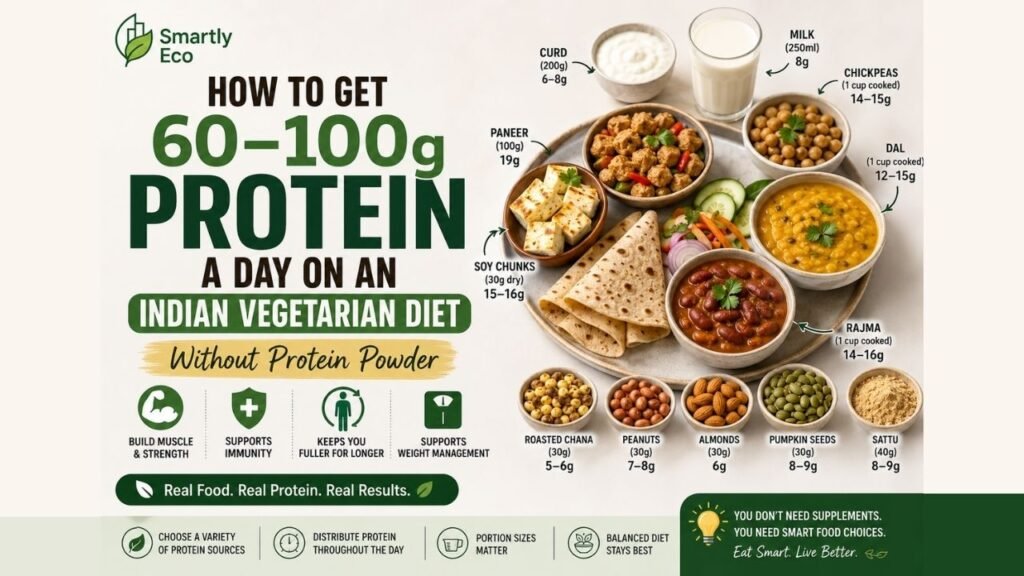
Vegetarian Protein Sources Inspired by Disha Patani’s Diet
Disha has spoken about the importance of including protein in her meals, especially around workouts. In some interviews, she mentions foods like eggs, chicken, or paneer as protein choices. If you’re vegetarian, though, there’s no need to feel left out.
With a little planning, you can build protein-rich meals using everyday Indian foods.
Everyday Vegetarian Protein Sources
| Food | Approx. Protein* | Why It’s a Good Choice |
|---|---|---|
| Paneer (100g) | ~18–20g | Rich in protein and calcium; works well in lunch or dinner. |
| Tofu (100g) | ~8–15g (varies by brand) | A great plant-based option that’s versatile and relatively low in saturated fat. |
| Soya Chunks (50g dry) | ~25g | One of the highest-protein vegetarian foods; economical and easy to add to curries or pulao. |
| Greek Yogurt / Hung Curd (200g) | ~18–20g | High in protein and suitable as a snack or breakfast. |
| Low-fat Curd (200g) | ~8–10g | Supports protein intake and provides probiotics. |
| Moong Dal (1 cup cooked) | ~14g | A staple that’s easy to digest and pairs well with rice or chapati. |
| Chana (1 cup cooked) | ~14–15g | High in protein and fibre; perfect for salads, curries, or snacks. |
| Rajma (1 cup cooked) | ~15g | Provides protein along with complex carbohydrates and fibre. |
| Mixed Lentils (Dal) | ~9–12g | Affordable, filling, and a daily protein source in many Indian homes. |
| Roasted Chana | ~6g per 30g | Portable, inexpensive, and much more filling than many packaged snacks. |
| Peanut Butter (2 tbsp) | ~8g | Useful with whole-grain toast or fruit as a snack. |
| Peanuts (30g) | ~7g | Budget-friendly and rich in healthy fats. |
| Almonds (30g) | ~6g | Good for healthy fats and a modest protein boost. |
| Pumpkin Seeds (30g) | ~8–9g | Easy to sprinkle over salads, curd, or oats. |
| Quinoa (1 cup cooked) | ~8g | Offers protein along with fibre and minerals. |
*Protein values are approximate and may vary by brand and preparation method.
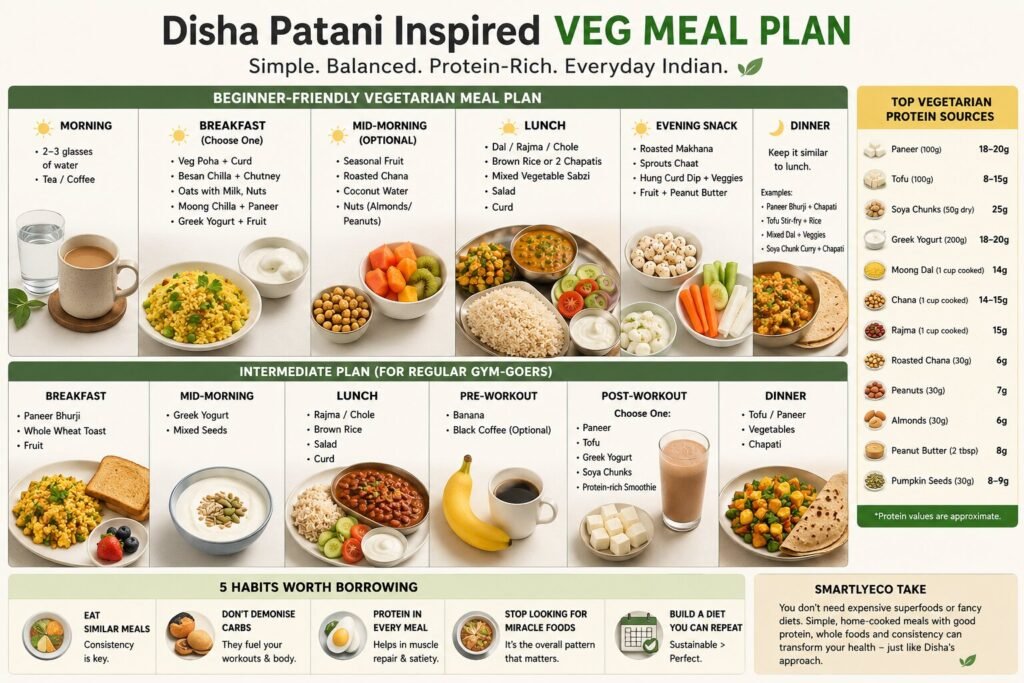
Beginner Vegetarian Meal Plan
This version is designed for someone who wants to eat healthier without making drastic changes.
🌅 Morning
- 2–3 glasses of water
- Tea or coffee (with no/minimal added sugar, if possible)
🍽️ Breakfast
Choose one:
- Vegetable poha + bowl of curd
- Besan chilla + mint chutney
- Oats cooked in milk with nuts and seeds
- Moong chilla stuffed with paneer
- Greek yogurt with fruit and seeds
🥜 Mid-Morning Snack (Optional)
- Seasonal fruit
- Roasted chana
- Coconut water
- Handful of peanuts or almonds
🥗 Lunch
Aim for a balanced plate:
- Dal or rajma or chole
- Brown rice or 2 chapatis
- Mixed vegetable sabzi
- Salad
- Curd
☕ Evening Snack
Instead of chips or biscuits, try:
- Roasted makhana
- Sprouts chaat
- Hung curd dip with vegetables
- Fruit with peanut butter
🌙 Dinner
Keep dinner similar to lunch.
Examples:
- Paneer bhurji + chapati + salad
- Tofu stir-fry + rice
- Mixed dal + vegetables
- Soya chunk curry + chapati
Simple meals are often easier to repeat.
And that’s usually more important than finding the “perfect” meal.
Intermediate Vegetarian Meal Plan (For Regular Gym-Goers)
If you’re exercising four or five times a week, your protein needs may increase.
Breakfast
- Paneer bhurji
- Whole wheat toast
- Fruit
Mid-Morning
- Greek yogurt
- Mixed seeds
Lunch
- Rajma or chole
- Brown rice
- Salad
- Curd
Pre-Workout
- Banana
- Black coffee (optional)
Post-Workout
Choose one:
- Paneer
- Tofu
- Greek yogurt
- Soya chunks
- Protein-rich smoothie (if appropriate for your diet)
Dinner
- Tofu or paneer
- Vegetables
- Chapati
Budget-Friendly Vegetarian Protein Swaps
One misconception is that eating more protein has to be expensive. It doesn’t.
| Instead of | Try |
|---|---|
| Protein bar | Roasted chana |
| Imported yogurt | Homemade hung curd |
| Expensive meat alternatives | Soya chunks |
| Protein cereal | Oats + milk + nuts |
| Fancy smoothie bowls | Fruit + curd + seeds |
Sometimes the simplest foods offer the best value.
⭐ SmartlyEco Take
Celebrity meal plans can make healthy eating feel expensive. The reality is often much simpler.
If your plate regularly includes dal, paneer, tofu, curd, legumes, vegetables, whole grains, and seasonal fruit, you’re already following many of the same nutrition principles that appear in Disha Patani’s reported diet.
You don’t need imported superfoods to eat well. You need meals you’ll actually enjoy enough to cook again tomorrow.
Can You Really Follow Disha Patani’s Diet? FAQs, Final Thoughts & References
By now, one thing should be fairly clear. Disha Patani’s diet isn’t built around expensive superfoods or complicated meal plans. If anything, it’s the opposite.
Simple meals. Regular protein. Plenty of water. A routine she can stick to. That doesn’t mean everyone should eat exactly the way she does.
She’s an actor with demanding training sessions, long shooting schedules, and fitness goals that are very different from most of ours. What is worth borrowing are the principles behind her routine:
- Keep meals balanced.
- Include a good source of protein.
- Stay hydrated.
- Allow yourself some flexibility.
- Focus on consistency rather than perfection.
Those ideas aren’t exclusive to celebrities. They’re backed by decades of nutrition research and are practical enough to fit into everyday life.
⭐ SmartlyEco Reality Check
If someone asked me, “What’s the biggest reason Disha Patani stays fit?” I probably wouldn’t answer “turmeric water.” I’d say discipline.
After reading through multiple interviews, the recurring theme isn’t one magical food or drink. It’s the fact that she follows a routine she enjoys and repeats it consistently. That’s much harder than trying a trendy diet for a week. And it’s probably why it works.
Frequently Asked Questions
1. What does Disha Patani eat in a day?
Based on her interview with Hindustan Times, Disha’s meals are generally simple and repetitive. Breakfast often includes eggs with rice or bread, while lunch and dinner usually revolve around protein, carbohydrates, and vegetables. She has also shared that she avoids unnecessary snacking and prefers eating three to four balanced meals a day.
2. Does Disha Patani drink turmeric water every morning?
Yes. Disha has publicly shared that turmeric water is part of her morning routine.
However, it’s important to keep expectations realistic. Current research suggests turmeric contains curcumin, which has anti-inflammatory properties, but there isn’t strong evidence that turmeric water alone leads to weight loss or muscle definition.
3. Does turmeric water help with weight loss?
Not directly.
Research hasn’t established turmeric water as a reliable weight-loss drink. It may complement an overall healthy lifestyle, but sustainable fat loss still depends on factors such as calorie balance, regular physical activity, sleep, and long-term eating habits.
4. Is Disha Patani’s diet vegetarian?
No. In interviews, Disha has mentioned foods such as eggs and chicken as part of her diet.
That said, many of the underlying nutrition principles can easily be adapted to a vegetarian lifestyle using foods like paneer, tofu, lentils, soy chunks, curd, and legumes.
5. How many meals does Disha Patani eat?
According to her interview with Hindustan Times, she generally eats three to four meals a day and avoids frequent snacking.
6. Does Disha Patani follow a crash diet?
There is no evidence that she follows crash diets.
Instead, her interviews suggest she prefers balanced meals, consistent eating habits, and allows herself an occasional cheat meal.
7. What protein sources does Disha Patani eat?
Disha has mentioned foods such as:
- Eggs
- Chicken
- Paneer
If you’re vegetarian, similar nutrition can come from:
- Tofu
- Soy chunks
- Lentils
- Greek yogurt
- Curd
- Chickpeas
- Rajma
8. Is Disha Patani’s diet good for weight loss?
It may support weight management because it emphasizes balanced meals, protein, and consistency.
However, whether it leads to weight loss depends on your overall calorie intake, activity level, sleep, stress, and individual health needs.
9. Can beginners follow Disha Patani’s diet?
Yes—but it’s better to adapt the principles rather than copy the meals exactly.
Start with:
- Regular meal timings
- More protein
- More vegetables
- Better hydration
- Less processed food
That’s likely to have a bigger impact than trying to recreate every meal she eats.
10. What’s the biggest lesson from Disha Patani’s diet?
Consistency.
Reading through multiple interviews, one thing stands out: she doesn’t describe an extreme or constantly changing diet.
She sticks with meals that work for her.
That might sound boring.
It also might be the reason she can maintain the habit year after year.
SmartlyEco’s Final Thoughts
It’s tempting to believe that celebrities have access to secrets the rest of us don’t. Sometimes they have better trainers. Sometimes they have more time. Sometimes they simply have different goals. But after spending time with Disha Patani’s interviews, I came away with a different impression.
The foundation of her diet isn’t extraordinary. It’s repeatable. There’s a quiet confidence in eating the same balanced meals, not chasing every new wellness trend, and letting consistency do the heavy lifting.
Maybe that’s the real takeaway. Not turmeric water. Not one specific breakfast. Not a celebrity meal plan.
Just the idea that healthy eating doesn’t have to be complicated to be effective. And honestly, that’s a lesson most of us could use.
Read Next on SmartlyEco
To continue your fitness journey, you might also enjoy:
- Disha Patani Workout Routine: What You Can Actually Learn From It
- Healthy Indian Breakfast Ideas That Are Actually Filling
References
Celebrity Interviews
- Hindustan Times – Disha Patani shares her morning drinks, daily meals, and cheat day habits.
https://www.hindustantimes.com/lifestyle/health/disha-patani-diet-secrets-age-33-toned-body-six-pack-abs-3-drinks-daily-morning-stay-fit-tumeric-water-tea-101768302732694.html - Vogue India – Disha Patani on workouts, nutrition, and protein-rich meals.
https://www.vogue.in/content/disha-patani-workout-diet-tips-interview
Scientific & Nutrition References
- Harvard T.H. Chan School of Public Health – Healthy Eating Plate
https://nutritionsource.hsph.harvard.edu/healthy-eating-plate/ - Harvard T.H. Chan School of Public Health – Protein
https://nutritionsource.hsph.harvard.edu/what-should-you-eat/protein/ - Harvard T.H. Chan School of Public Health – Tea
https://nutritionsource.hsph.harvard.edu/tea/ - NIH Office of Dietary Supplements – Turmeric Fact Sheet
https://ods.od.nih.gov/factsheets/Turmeric-HealthProfessional/ - ICMR–National Institute of Nutrition – Dietary Guidelines for Indians
https://www.nin.res.in/
Read Next
- Disha Patani’s Workout Routine: The Real Fitness Lessons Most People Miss
- What Disha Patani Prioritises for Glowing Skin
- Inside Rashmika Mandanna’s Diet Plan

Komal Palesha is a health and lifestyle writer at Smartly Eco, specialising in fitness, natural beauty, and mindful nutrition for urban Indians. She covers topics ranging from celebrity fitness routines to traditional Indian remedies backed by modern science — translating complex wellness research into practical, actionable advice. Komal is committed to promoting health choices that are sustainable, affordable, and rooted in Indian culture.